_edited.jpg)

A CHILDREN'S BOOK SERIES TOLD IN FOUR ARCS
As the wind blows, so we learn our own path.
As the sun shines, so we grow closer together.
In an awakening world,
the animals and plants would awaken too.
GLENGARRY
TALES
As the snow falls, so we discover the mysteries of the North.
As the seasons turn, so we uncover the secrets of them all.
FOUR STORY ARCS IN
A TWENTY-FIVE BOOK SERIES

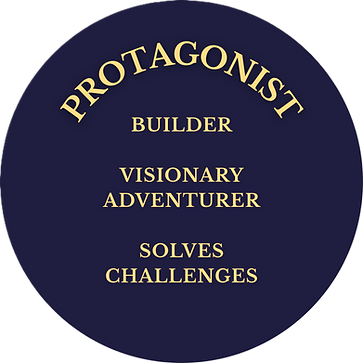
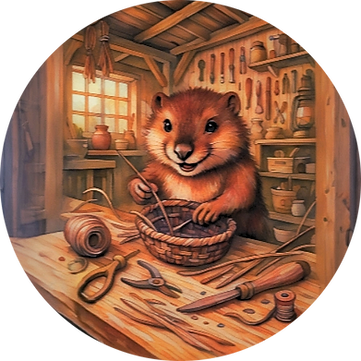
Main Character: Morris the Muskrat
Glengarry Tales is a richly imagined journey from childhood to young adulthood. The series' final stories lead to the author's YA and adult books, much as The Hobbit opened the way to The Lord of the Rings. But the source of wonder here is not fantasy, rather a renewed vision of nature in magically real settings.
Glengarry Tales is magical realism for kids, a Canadian woodland epic where nature itself is awakening. As the veil between species thins, animals, plants, and people start to see and understand one another anew.
Once nature begins to speak, young readers are drawn into a mystical quest to discover our planet's hidden intelligence.
Their guide along the way is Morris the Muskrat, whose creativity and friendships help him resolve challenges and bridge divides. His journey carries him from adventures in the marshlands, to his workshop in the humans' town, to a quest to understand changes in the world as humans, animals and plants communicate with one other.
Set in rural Eastern Ontario, Canada, the series traverses a living landscape whose lessons and shared wisdom will last a lifetime.

SERIES OVERVIEW
Glengarry Tales follows Morris as he journeys from the wilderness to villages and farms. He discovers that domesticated animals and humans face the same challenges of survival as the creatures of the marsh. The boundaries between ‘wild’ and ‘tame,’ and ‘animal’ and ‘human,’ dissolve into shared understanding.
This surprising harmony has emerged from a greater shift on Earth: animals can now communicate with humans. How has this happened? Seeking answers, Morris and his friends embark on a quest.
This is a 25-book storybook series, structured into four developmental arcs:
-
The Early Years (Books 1–7): My World – Self-Discovery and Foundational Themes
-
The Middle Years (Books 8–14): Our World – Overcoming Divisions, Learning from Nature, Sharing Knowledge
-
The Quest (Books 15–21): The World Beyond – Adventure, Mysticism, Hidden Powers
-
The Stories of the Seasons (Books 22–25): The Wisdom of the Animals
THE BRIDGE
Based on this storyworld’s depiction of Earth awakening to a higher level of consciousness, the characters gather and preserve the shared wisdom of all beings, shaped by their widening understanding of reality. Each story reflects this planetary awakening and contributes to an unfolding mythos. Together, these wisdoms form a bridge toward what later becomes known as Full Spectrum Reality: a living synthesis of the cosmic, the natural, and the human:
THE WISDOM OF THE STARS (mentioned in Glengarry Tales)
THE WISDOM OF THE TREES (partly revealed in Glengarry Tales)
THE WISDOM OF THE ANIMALS (the outcome of Glengarry Tales)
THE WISDOM OF THE HUMANS (the outcome of YA & adult novels)


Glengarry Tales is a series that grows with its readers. This four-arc work guides its readers through the full 6–12 middle-grade span with progressive sophistication of prose, metaphor, and theme, while establishing a bridge toward the author’s forthcoming YA and adult novels.
ARC ONE: THE EARLY YEARS
MY WORLD
IN SEVEN BOOKS
Ages 6–7. These first stories introduce the natural world as a source of wonder and wisdom. Told through the voices of wild creatures, they explore self-discovery, friendship, and resilience. Young readers meet Morris Tallgrass, a muskrat who cannot yet swim but shows unusual gifts as a builder and dreamer. Through his struggles with fear, bullying, and self-doubt, Morris learns that what sets him apart is what makes him shine, providing an early lesson in identity and courage that grounds the series.
Book 1: Morris the Master Meshmaker
Morris, a young muskrat ashamed of not yet being able to swim, discovers his gift for weaving. His basket-boat sweeps him downstream to the nearby town, introducing readers to the wider world of Glengarry.
Book 2: Morris Braves the Water
Mocked by Ondatra for being a late swimmer, Morris makes his first long swim to a family gathering, using paddles he crafted himself.
Book 3: Paleslip and Balathina
On his first day of life, Paleslip the fawn narrowly escapes a fox. He befriends another fawn, Balathina, and their bond develops as they explore the meadow.
Book 4: Songs from the Flower Garden
In a sunlit garden, hummingbirds, bees, and butterflies weave an alphabet of colour and sound, revealing the hidden poetry of the natural world.
Book 5: The Bees of Cedar Knot
A wild bee colony outwits a determined would-be beekeeper in a lighthearted tale about the spirited independence of nature.
Book 6: Mouselings
Tiny fieldmice sip mouse tea as their mother tells a cherished family tale, in an introduction to the lore and traditions of the meadow.
Book 7: The Vixen’s Long Day
A mother fox, separated from her kits, calls out to them from a high rock. Her panic relays a cautionary tale about listening to one’s parents.

Morris bobbed down the Garry River. The banks widened. Carp flitted below him, while seagulls swooped and called overhead. Morris shivered. He had to stop before nightfall but the basket was hard to steer. It was dark by the time he landed on the river bank.
From Book 1: Morris the Master Meshmaker
ARC Two; THE MIDDLE YEARS
OUR WORLD:
THE ANIMALS OF GLENGARRY
IN SEVEN BOOKS
Ages 8–10. In these stories, Morris grows into a leadership role as animals and humans begin to recognize their shared challenges: providing food, finding water, building shelter, resolving conflicts, and caring for the land. Cooperation becomes the heart of this arc. Morris’s workshop evolves into a hub for problem-solving, where he helps families dig wells, run farms, and protect wild spaces. These longer books deepen middle-grade readers’ understanding of community, practical knowledge, and the creative arts, while introducing real regional settings such as Alexandria, Maxville, and Marlin Orchards.
Book 8: Morris the Muskrat Goes to the Highland Games
Morris and friends visit the Glengarry Highland Games, trying their paws at bagpipes and miniature sports while discovering the meaning of culture and community.
Book 9: Morris Digs a Well
As lead builder among the muskrats, Morris joins the beavers to help the humans dig a well. Readers learn where water comes from, how it comes up through pipes to help us, and then returns to the underground river where it lives.
Book 10: Morris Tallgrass & Company
Morris opens a workshop in town, becoming a bridge between animals and humans as they share news, skills, and stories, including a visit to a local dairy and cheese factory.
Book 11: Henkania and the Musical Forest
Henkania the Hermit Thrush teaches the forest birds how to sing, revealing the art of harmonics behind her voice and its similarity to the humans’ music.
Book 12: The Horse and Carrot Ride
The animals catch a ride on a pile of horse carrots to a nearby farm. They hear how horses view the farms and woodlands – and human civilization.
Book 13: Bettina the Cat’s Grand Divorce
Bettina, the Queen Cat of Alexandria, confronts a swaggering tomcat who disrupts her peaceful domain. Their dramatic break-up gives young readers a lighthearted glimpse into adult boundaries and emotional independence.
Book 14: Valpol, the Coyote of Chaos
After wreaking havoc across Glengarry, Valpol the Coyote gets his just deserts. As the humans set out to hunt him, the animals have to admit that for once, they see the humans' point of view. Valpol escapes, humbled, though he later brags that his chaos made him Glengarry’s Great Peacemaker between the animals and humans, and that this was his plan all along.


ARC THREE:
THE QUEST
THE WORLD BEYOND
IN SEVEN BOOKS
Ages 10–12. As readers enter upper middle grade, the storyworld opens into a larger mystery. Morris and his friends realize that their world has changed: animals and humans were not always able to speak to one another, but now they can. Spurred by stories from migratory birds and animals, the companions leave Glengarry to discover why nature has awakened.
As Morris ventures further from home, the stories deepen into pre-YA territory – longer chapters, layered myth, and revelations about the cosmic forces shaping the animals' world.
The tone draws inspiration from The Hobbit, The Chronicles of Narnia, The NeverEnding Story, The Dark Crystal, and The Chronicles of Prydain. Arcs III and IV present an epic quest threaded with wonder, friendship, and the dawning awareness of hidden powers.


Book 15: The Wisdom of the Stars
At the ruins of St. Raphael’s Church, the animals gather beside humans watching the Perseids meteor shower, only to discover that they can hear the meteors singing to them. The falling stars share ancient stories no creature has ever heard, revealing that something in the world has fundamentally changed.
Book 16: Crisis of the Cut Forest
When the farmers clear a nearby forest, the displaced birds and animals – many of them characters from earlier stories – confront the shock together. They assemble and begin to ask deeper questions about human choices. The story opens a conversation about land, responsibility, and the fragile balance between nature and civilization.
Book 17: Clement, Wisest of the Beavers
Clement, leader of the beavers, dies. The marsh folk meet at the beavers’ Great Lodge to discuss his legacy and realize they need a larger understanding. The humans and animals can now speak to each other. Even so, not all humans are the same. Nor are all animals the same. The trees are waking up. The gathering calls on Morris and his companions to begin a quest for knowledge to discover how and why the world has changed.
Book 18: The Secret of All Migrations
To begin the quest, Morris seeks out the King of the Salamanders, a cryptic sage who tells him he must gather the wisdom of the animals, including the long-kept secret of migrations. As spring unfolds, Morris and his companions interview a wandering black bear in the orchards, then send a delegation to the first Eastern Cougar to return to Glengarry in generations. A passing Eastern Wolf shares what he knows of the Algonquian wildlands to the north. Together, these accounts reveal that a greater shift is sweeping across the continent.
Book 19: The Wisdom of the Trees
Morris and his companions journey to a rare patch of old-growth forest, which has never been cut by humans. Shocked by the grandeur and size of the ancient trees, the animals make their way to the heart of the woodland. There, they meet a tremendous yellow birch with golden bark, who reveals that the trees have gathered the hidden wisdom of the plant kingdom. The birch tells the animals that they will find similar answers for themselves at Kingsmere, a mystical grove north of Ottawa.
Books 20 & 21: The Parliament of the Animals (Two Parts)
At a mysterious portal at Kingsmere, Morris and his companions attend the Parliament of the Animals, who gain an audience with the soul of the Earth, the Anima Mundi. Their audience connects Glengarry Tales to the wider mythos of the author’s YA- and adult-oriented work, Isis Chrysalis, which further illuminates the cosmic forces behind the awakening of the planet.
Morris at Kingsmere.
From Glengarry Tales to Isis Chrysalis
The author's works for children and adults form a single evolving mythos that imagines a vast renewal of our planet. The Glengarry Tales portray the awakening of animals and plants, giving rise to their collection of bodies of knowledge: The Wisdom of the Stars, The Wisdom of the Trees, and The Wisdom of the Animals.
Douglass's books for young adult and adult readers exploreThe Wisdom of the Humans, thereby completing this circle of awareness.
Below is Douglass's reading from "Kingsmere Gate," an excerpt from her adult novel, Isis Chrysalis. It features the 'Parliament of the Animals' scene that appears in both Glengarry Tales and Isis Chrysalis.
Crossover to YA and Adult Books
Arc four:
the stories of the seasons
THE WISDOM OF THE ANIMALS
IN FOUR BOOKS
Ages 8–12. In this final arc, the animals of Glengarry gather together what they have learned in a collective understanding they call The Wisdom of the Animals. This knowledge represents the animals’ views on survival, community, and the forces shaping the natural world.
The Seasonal Stories draw directly from the author’s study of folklore and fairytale traditions. She completed a winter tales course given by the Carterhaugh School of Folklore and the Fantastic, for which she read pieces by authors such as Hans Christian Andersen, the Brothers Grimm, Christen Asbjørnsen, Jørgen Moe and Lafcadio Hearn. She later presented research on spring storytelling conventions at McGill University’s Lifelong Learning program.
This grounding in traditional narrative rhythms – winter endurance, spring renewal, midsummer vision, and autumn reckoning – gives Arc IV its mythic resonance and cultural authenticity.
Book 1: The Watchers of January
In the depths of winter, the rabbits and hare assemble to share the lessons of those who remain awake through the year’s hardest months. Their tale centres on trust, both in oneself and in others, when survival demands courage and vigilance.
Book 2: The Keepers of the Dawn
The beavers and muskrats call together all the marshland creatures to understand why Father Sun withdraws in winter and returns in spring. Within their council lies the parable of Minnifair the Squirrel, whose bullying crisis unites the animals in rare collective action and reveals the meaning of renewal.
Book 3: The Song of High Summer
At midsummer’s height, the deer convene to remember the Great Stag, a wandering poet who recited verses about realms of the forest that lie beyond ordinary sight. Through his poems, the deer preserve a vision of the unseen architecture of the natural world.
Book 4: Howlfest at Hunters’ Way
The coyotes gather in a great howlfest to recount the Hunters’ Way, their values regarding predation and coexistence. Their laws interweave across wild creatures, domesticated animals, and the humans who share the land. Their tale places the role of the hunter within the wider natural order of Glengarry.
Epilogue
An epilogue adds the knowledge gained by Morris and his companions and resolves the battles between predators and prey in a final storytelling.

Seasons' Epilogue:
The dawn meeting between predators and prey.


Tala the Turtle
"Follow the waterways, Muskrat Child! They
are the map of everything that moves and grows. They will guide you wherever you may go. Life begins in mud and reeds, as we swim the waterflow. Sing of wind, and rise like trees, we laugh despite the undertow."

Morris the Muskrat
"All along, I thought that building a workshop in the humans' town was my destiny. But every bridge I built and well I dug led back to me. Then I realized that I needed to travel where the mapped road ends, into a dream of nature's soul."


Bettina
Queen Cat of Alexandria
"I just got back from the vet's in Vankleek Hill where I got my claws done. Keep them short and sharp, Muskrat Child! The humans adore a well-groomed savage. But remember, they bow only to those who land on all four paws."

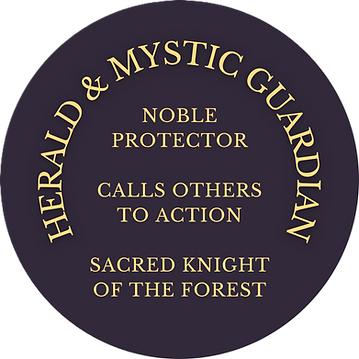
Paleslip the Stag
"Test us now, test us then. We remember what the Great Stag said: the balance must be born again. The forest keeps its oaths in song, because the Deer People still run strong. We will carry Midsummer's light into the eclipsed heart of solstice night."


Valpol the Coyote
"It's nights like these,
I turns and sees, I sees the way my way turns blue. And at the crack I don't turn back.
But even I don't howl long when the moon sleeps lost and cold and new. And if the stars went dark one night, I might, just might, turn back to you."


Nox the Owl
"You ask the way, Morris. After you left your well-worn path? I only speak of what the stars have forgotten, for they never stray. All roads and rivers will take you there. Everyone, birds, animals, plants and humans will follow this same wind. I just wouldn’t bet a tail feather on this being your smoothest flight."
MARKET OVERVIEW
Comparable Titles
Glengarry Tales stands in the tradition of Pax, Bambi, and The Wind in the Willows: animal-centered classics which blend emotional depth, ecological awareness, and lyrical storytelling. Like Pax, this series explores empathy and the human-animal connection with empathic resonance. Like Bambi, Glengarry Tales presents full character and story arcs which reflect nature as a living presence rather than just a backdrop. Like Wind in the Willows, it carries pastoral charm, described with a timeless voice.
In spirit, Douglass’s work presents a real-world Shire without hobbits as the site of a Canadian woodland epic, rooted in the marshes and forests of Eastern Ontario. Its ecological realism pays homage to Silverwing. It also acknowledges Redwall’s communal heroism. But Glengarry Tales ultimately diverges from these earlier works: it moves toward a final point of interspecies cooperation between predators and prey – a moment which neither Silverwing nor Redwall pursues.
Magical Realistic Context
Although children’s magical realism is rare, Glengarry Tales shares kinship with works such as Skellig (David Almond) for its quiet metaphysics, A Monster Calls (Patrick Ness) for its mythic presence emerging into ordinary life, and Tuck Everlasting (Natalie Babbitt) for its sense of natural mystery embedded in the real world. Its underlying cosmology echoes C.S. Lewis in The Magician’s Nephew, where parallel realms lie close at hand and are revealed when characters cross into a wider, more enchanted understanding of reality. This series also carries a thread akin to Philip Pullman’s idea of Dust, an invisible intelligence woven through the material world.
However, Glengarry Tales remains distinct: its magical realism is ecological rather than supernatural, rooted in Canadian woodland life, and expressed through an awakening shared by animals, humans, and the land itself. Instead of introducing magic into the world, the series reveals a presence which the animals come to recognize as the soul of the world, an inner consciousness that has always been there, unseen and unrecognized, now emerging as their awareness deepens.
Closest Comparables
-
Peter Rabbit books (Beatrix Potter) – gentle beginnings and pastoral intimacy
-
Bambi (Felix Salten) – ecological realism and emotional gravity
-
The Wind in the Willows (Kenneth Grahame) – lyricism and enduring charm
-
The Hobbit (J.R.R. Tolkien) – the Shire without hobbits, quest structure, mythic clarity, and a bridge to a wider mythic world
-
Pax (Sara Pennypacker) – emotional intelligence and human-animal reciprocity
-
Silverwing (Kenneth Oppel) – Canadian wilderness and coming-of-age depth
-
Redwall (Brian Jacques) – for its sense of community and quest companionship, though Glengarry Tales takes a gentler, more contemplative, nature-rooted approach rather than medieval swashbuckling
-
The Chronicles of Narnia (C.S. Lewis) – moral resonance, character evolution, and layered allegory
-
Hans Christian Andersen and seasonal folklore – inspire the structure and mood of Glengarry Tales’ Seasonal Stories
Across its four arcs, Glengarry Tales matures with its readers, beginning in the gentle tradition of Potter and Salten and deepening into the moral resonance and character evolution of Narnia with the mythic expansiveness of Tolkien.
Target Audience
Glengarry Tales is written for readers who love timeless, animal-centered adventures that blend allegory, nature, and moral imagination. Its core audience is children, aged 6–12, especially those who are intellectually curious, sensitive, and imaginative, as well as parents, grandparents, teachers, and librarians who seek high literary quality, rich artwork, and stories which foster environmental awareness and empathy.
The series also functions as crossover family reading, with layered prose, metaphor, and emotional depth that grow progressively across the arcs.
-
Primary markets: Canada, the United States, and the United Kingdom
-
International appeal: Multicultural families and educators in Australia, New Zealand, Western Europe, and globally who value ecological storytelling and classic narrative traditions
Format Innovation
A bilingual edition (English paired with French or another locally relevant language on the obverse) would reflect Glengarry's bilingual reality and would broaden the series’ reach in Canada, Europe, and other multilingual markets. This format innovation could offer strong potential for use in language-learning and educational contexts.
Visual Positioning
Given the series’ themes of perception and awakening, the author envisions a luminous watercolour aesthetic. The interplay between language and imagery takes inspiration from The Lost Words (Robert Macfarlane and Jackie Morris), where art and text deepen children's sense of wonder about nature. A favourite contemporary reference is Canadian artist and illustrator, Lily Seika Jones (rivuletpaper), whose delicate, atmospheric work aligns with the mood of the series.
INSPIRATIONS FROM THE REAL WORLD
The author’s environmental storytelling is grounded in real experience: fifteen years of private forest stewardship, service on the board of a local woodland-trails charity, and long-term observation of farming life in Glengarry County. This background brings a natural authenticity and ecological accuracy to the series.

Introductory Video from the Author
Glengarry is a historic rural county located between Ottawa and Montreal, where the Ottawa and St. Lawrence Rivers frame a landscape of farms, forests, and wetlands.
This liminal terrain is a place where the cycles of nature shape the lives of humans and animals in equal measure, hinting at a deeper mystery beneath the land. The setting feels authentically Canadian yet universally resonant, giving the series a vivid sense of place without limiting its reach. Through this setting, the series invites young readers into a world that is both real and timeless.

AUTHOR'S VISION

About
The Author
Larissa Douglass is an Oxford-educated and award-winning author who has written across many genres, from poetry to non-fiction. Originally from Montreal, her parents moved with her to Glengarry in 1974.
With years of experience teaching K–12 students as well as undergraduates, she is deeply aware of the educational potential of storytelling. She sees Glengarry Tales not only as a literary work, but also as a foundation for educational and creative initiatives that invite children to think and connect with nature as part of a lifelong journey.
The idea that animals might be gaining new forms of awareness first appeared in Douglass’s 2017 blog post, Cairn Building Sacred Tree Chimps. Researchers from the Max Planck Institute for Evolutionary Anthropology observed male chimpanzees in Guinea-Bissau apparently creating a sacred site and worshipping at it. Another inspiration was a beloved oak tree at the foot of the author's property, marked by a natural heart on its trunk. Although healthy, the tree was felled by North Glengarry Township on 6 September 2022. The tree appears in Glengarry Tales and in the Isis Chrysalis story, The Kingdom of the Squirrels.
Douglass’s work on Glengarry Tales forms a foundational prelude to a young adult- and adult-oriented series of magical realist novels, listed on her main website, LCDOUGLASS.COM. Her years at Oxford at the turn of the Millennium deepened her admiration for J.R.R. Tolkien and C.S. Lewis, who remain guiding lights in her creative life. She conceives of her work as a contemporary continuation of Lewis's Space Trilogy and a reawakening of moral imagination for the modern world: the Silent Planet is no longer silent.
Why Glengarry Tales?
Why Glengarry Tales and why now? Children growing up surrounded by noise and uncertainty need more than distraction. They need a sense of belonging to the living world. In these stories, nature is not backdrop but a friend and teacher. Glengarry Tales is not an escape from reality but a re-enchantment of it, a reminder that taking time to understand and observe nature is a form of love.


CONTACT

LITERARY INQUIRIES
Representation and Rights
I welcome inquiries from literary agents and industry professionals interested in representation or rights discussions for Glengarry Tales and its connected works.
For further information or to request materials, please contact me at: larissa.douglass@sant.oxon.org
You may also click below to use the contact form.

© 2025 Larissa C. Douglass. All rights reserved. No portion of this material may be reproduced or distributed without written permission from the author.